الاثنين، 4 يناير 2021

NEWS TECHNOLOGIE

The ongoing shortage of Xbox and PlayStation consoles has been a story since these platforms launched in November. The shortage isn’t unique to console gaming — there are problems with hardware availability across both PCs and consoles as recently launched GPUs from Nvidia and AMD remain difficult to find, as do AMD’s Ryzen 5000 CPUs.

According to Xbox head Phil Spencer, the company has been fielding questions related to Xbox production for weeks.

“I get some people [asking], ‘why didn’t you build more? Why didn’t you start earlier? Why didn’t you ship them earlier?’ All of those things,” Spencer said on a Major Nelson podcast, as spotted by VGC.

“It’s really just down to physics and engineering. We’re not holding them back: we’re building them as fast as we can. We have all the assembly lines going. I was on the phone last week with Lisa Su at AMD [asking], ‘how do we get more?’ So it’s something that we’re constantly working on.”

I don’t want to say that there’s nothing AMD can do to improve the situation for Microsoft, but the company’s ability to change the situation are probably limited. AMD’s involvement with the chip is limited to designing it — the actual job of manufacturing and shipping it in sufficient volume is done by TSMC.

There may indeed be some knobs and dials that AMD has some indirect control over, or it might be able to work with TSMC to enhance yields if a certain number of Xbox Series X|S SoCs are just barely missing spec. Small tweaks to improve yield and performance are common. From the mid-aughts to the mid-2010s, it wasn’t unusual to see AMD or Intel introduce a newer variant of an older chip, but with a lower TDP compared with what they’d shipped right out the door. These improvements reflected low-end optimizations.

But, while AMD might be able to boost Xbox production by reducing orders in other 7nm product families, the company will be limited by how much 7nm capacity TSMC has. Last fall, multiple reports suggested TSMC would be able to build 140,000 7nm wafers a month by the end of 2020. In the first half of 2020, TSMC’s WPM (wafers per month) was estimated at 110K. This implies the company increased its 7nm capacity by 1.27x throughout the year.

Clearly, it hasn’t been enough, and Nvidia’s decision to build with Samsung on 8N instead of tapping TSMC’s 7nm hasn’t been enough to save Ampere’s availability, either. Nvidia is currently expected to move to TSMC 7nm for additional Ampere production in 2021, which may put even more pressure on the situation.

Relief might come in the form of drawdowns on 7nm mobile demand as companies transition to 5nm. Currently, a number of companies have told consumers to expect better product availability after the March – April 2021 timeframe, which could reflect anything from new capacity coming online, to improved yields, to decreased 7nm utilization as companies transition to 5nm. It could even be that companies are forecasting decreased shutdown levels by that point, which might lead to a slackening of demand, especially in the short term. Once people can leave the house safely again, we’ll probably see spending flow out of video games and home entertainment and back towards other types of leisure, even if the pandemic creates a long-term uptick in the number of people buying consoles, subscribing to streaming services, or working from home.

Image by VGChartz

The best data we have on the two console manufacturers’ relative performance comes from VGChartz. They’ve compiled their estimates for sales over the first six weeks since launch (the Switch data is aligned to its launch, not present-day sales). The results are not particularly great for Microsoft, though we’d caution that only a very limited amount of data can be drawn from the first six weeks, especially at a time when console sales continue to be supply limited. All indications suggest that Microsoft and Sony continue to sell every console they can make.

US sales, VGChartz

US sales are a better story for Microsoft. While the Xbox Series S|X are still lower than PlayStation 5, they’re off by roughly 30 percent, not nearly 50 percent. This is also the one region where Xbox is actually beating Switch in terms of worldwide sales. Everywhere else, Switch leads, including Japan.

For now, evidence indicates the PlayStation 5 is strongly outselling the Xbox Series (both flavors) globally, with a tighter (but still Sony-favoring) competition in the US. Whether AMD can do anything to put more console SoCs in the hands of its partners is unknown. Also, wasn’t it the PlayStation 5 that was supposed to be facing the severe supply constraints?

Now Read:


from ExtremeTechExtremeTech https://ift.tt/391rhvn

NEWS TECHNOLOGIE

A recent (and now edited) job ad published by Microsoft implies that the company is planning a major UI overhaul this year. The now-altered job listing originally stated:

On this team, you’ll work with our key platform, Surface, and OEM partners to orchestrate and deliver a sweeping visual rejuvenation of Windows experiences to signal to our customers that Windows is BACK and ensure that Windows is considered the best user OS experience for customers.”

The new text backs off these claims, but notes that one of the job’s assignments is: “working directly with our customers to understand their needs and deliver magical software that exceeds their expectations!” Hope you’ve got a copy of “Conjuring With XAML” handy.

How Can I Miss You, If You Won’t Go Away?

It’s just as well that Microsoft replaced the text in the original ad because the previous framing leaves us with nothing but questions. Among them:

When did Windows leave?

Where did it go? Was this a “Windows is BACK” in the sense of a drunk yell-slurring an announcement as they stumble through the door at 2 AM, or is this meant to come off like the second diner scene in Superman II? If the latter, who exactly is the abusive trucker in this scenario? Google? Apple? IBM’s OS/2? (It’s probably not OS/2.)

Aforementioned scene included above, as it’s rude to reference 38-year-old superhero movies without a bit of footage.

Microsoft wants to “ensure that Windows is considered the best user OS experience for customers.” That’s a great goal. But again — who is the competition, here? The only two possibilities are Chromebooks and Apple’s macOS. There’s definitely an argument that Windows could use a stronger position against those competitors, but it’s not going to come from a UI overhaul.

As far as practical UI changes that I’d like to see:

It would be nice if Microsoft could migrate back to having one Control Panel / Settings panel, but not if it requires dumbing down the existing Control Panel, or burying settings under a lot more clicks. The current system of “Sometimes you adjust things in Control Panel, sometimes in Settings,” has been garbage since it debuted nine years ago with Windows 8.

An overhaul to media playback. The small vertical rectangle for adjusting the volume up and down is nice; the giant carve-out that refreshes itself if you inadvertently mouse over it on your way to something else, isn’t. An option to kill this behavior would be nice.

Here are another two UI changes I’d like: Allow me to organize installed applications by the date they were installed. Bring back the use of color gradients in menus to make it easier to distinguish from various options.

Finally, while it’s not a UI request, maybe fix the whole “We don’t scale above 64 threads without using processor groups” problem. Not a huge issue now, but probably going to be bigger in the future, given how core counts tend to waterfall into lower product markets over time.

Chances are, the improvements Microsoft actually has in mind will be things like icon updates, along with tweaks to the File Explorer, Action Center, and Start Menu. It’s important to have an important and clearly communicated visual language, so I’m not dismissing any effort to improve them. At the same time, I’m not sure any such overhaul will meaningfully change the Windows experience unless Microsoft launches a new set of dark patterns to hide the method of creating a local Windows account, or to trick you into believing it isn’t possible.

The number one reason to use Windows is that the software you want to use runs well on Windows. That’s the exact same reason to use macOS or a Chromebook. If Microsoft has come up with a way to improve battery life or performance by overhauling its OS, that’d be very interesting. A standard UI overhaul will probably contain a few cleaned-up bits that we’ve wanted, but not much that will change the underlying experience, “magical” software notwithstanding.

Now Read:


from ExtremeTechExtremeTech https://ift.tt/3oeCa3y

NEWS TECHNOLOGIE

Credit: Getty Images. 3D Abstract HUD brain and nervous system wireframe hologram simulation node with lighting on blue background. Nanotechnology and futuristics science concept. Medical and Healthcare. Intelligence and knowledge brain structure
(Credit: Getty Images)
Since its conception by the British computer scientist Alan Turing, the so-called Turing Test has served as an unofficial benchmark for artificial intelligence. The test is conceptually simple. Imagine a judge who is asked to evaluate the natural language responses of two individuals, neither of which he can see. The judge is limited to evaluating the written responses submitted by each candidate — he cannot see, hear, or speak to the test-takers.

Image by Wikipedia

If one of the participants is a computer and one is human, and the judge cannot tell which of them is which, a computer is said to have passed the Turing test. The test has served as a pole star and long-term goal for AI researchers across the decades. Now, Rohit Prassad, VP and head scientist of Alexa, argues that the Turing test has us barking up the wrong set of trees. He writes in Fast Company:

I believe the goal put forth by Turing is not a useful one for AI scientists like myself to work toward. The Turing Test is fraught with limitations, some of which Turing himself debated in his seminal paper. With AI now ubiquitously integrated into our phones, cars, and homes, it’s become increasingly obvious that people care much more that their interactions with machines be useful, seamless and transparent—and that the concept of machines being indistinguishable from a human is out of touch.

Prassad is absolutely right that the Turing Test has acknowledged limitations. It tests whether a computer behaves like a human being, not whether a computer demonstrates something we might call “intelligence.” It puts constraints on the scenario that might require a computer to misrepresent the amount of time it took to complete a complex math equation, for example, in order to avoid being given away by its own performance. It’s also theoretically possible for a sufficiently advanced language processor to pass the Turing Test without possessing any of the characteristics people tend to think of when they imagine a machine that could pass the Turing Test.

Prassad argues that the question of “When will Alexa pass the Turing test?” doesn’t capture the actual value of Alexa very well. He points out that when Alan Turing wrote his seminal paper in 1950, the first commercial computer hadn’t even been sold yet, and that the Turing Test was never intended to serve as the ultimate test of artificial intelligence. He argues instead that we should build AIs that augment human intelligence and improve human lives “in a way that is both equitable and inclusive.”

He argues in favor of building devices and systems that align with the approach Amazon has taken with Alexa. Instead of attempting to pretend to be human, AI systems should focus on completing everyday tasks efficiently. Ultimately, such systems should combine human-like attributes with machine efficiency. This isn’t exactly a surprising opinion for a person in his position to hold. While I agree there’s no reason to regard the Turing Test as the method by which artificial intelligence should be evaluated, I’m less quick to dismiss it altogether. The Turing Test, as originally envisioned, requires that the computer being tested be capable of fooling a judge on any requested topic. In envisioning the kind of questions a computer might be expected to answer, Turing didn’t emphasize engineering or math questions. One example from the paper reads:

Interrogator: In the first line of your sonnet which reads, “Shall I compare thee to a summer’s day,” would not “a spring day” do as well or better?

Witness: It wouldn’t scan.

Interrogator: How about “a winter’s day.” That would scan all right.

Witness: Yes, but nobody wants to be compared to a winter’s day.

Turing doesn’t just imagine a computer that understands scansion. He imagined a computer that can correctly answer that being compared to a winter day is not a compliment when asked about the reasons why it chose its words. The Turing Test isn’t just a test of a computer’s ability to answer factual questions. It’s a test of a computer’s ability to provide human-equivalent answers to questions concerning its aesthetic sensibilities.

Even if the Turing Test is obsolete in certain respects, it touches on capabilities that have more in common with advancing Alexa and similar systems than Prassad gives it credit for. It may not be worth focusing an enormous amount of energy on specifically designing computers that can pass for human, but Turing’s thought experiment explicitly incorporates the idea of a computer that understands how to communicate nuance and can answer follow-up questions by coherently referencing its own sense of beauty.

Is that marketable the way an AI that can manage your calendar and email while screening your calls and playing media on-demand? Probably not. But it’s not worthless, either. Not even 70 years on.

Now Read:


from ExtremeTechExtremeTech https://ift.tt/3rVoxZs

NEWS TECHNOLOGIE

Up until now, SpaceX rockets have always landed by deploying legs around the rocket as it returned to earth. If new remarks from Elon Musk are accurate, the company wants to get rid of that method to save weight. Future spacecraft may not sport legs at all.

The Super Heavy launch vehicle is the first-stage launcher for the second-stage craft known as Starship. Super Heavy will still use its engines to control its descent, similar to the current Falcon 9, but it will use its grid fins to control orientation in flight.

According to Musk, SpaceX believes it doesn’t need legs to land the rocket safely. After a reader asked Elon if a user-created video captured the Super Heavy descent profile accurately, the founder of SpaceX dropped this announcement:

“We’re going to try to catch the Super Heavy Booster with the launch tower arm, using the grid fins to take the load” doesn’t sound like the kind of statement that gets people hot and bothered, but context is everything, and an awful lot of SpaceX fans are excited about the idea. An equally large group of them, including the author, are a bit puzzled by it. It isn’t clear what it means to have the launch tower “catch” the Super Heavy. Launch towers don’t exactly fall down if you breathe on them, but I’ve never heard of using one directly to catch a rocket (even a depleted, first-stage rocket).

The implication seems to be that the rocket bears its own weight directly on the grid fins and that the “catch” is more about lining up the rocket with the launch arm in a way that allows them to interlink again, as opposed to using the launch arm to somehow brake or control the Super Heavy as it descends.

According to Elon, the goal is to enable the reuse of the same rocket in under an hour. This is rocket re-usability of the sort envisioned by sci-fi writers who predicted Earth-Moon or Earth-Mars shuttles leaving every hour on the other, with little more than a refueling required before the next journey.

It’ll be a long time before we reach anything like that speed, if ever. The first Super Heavy boosters to land successfully will be carefully analyzed before being allowed to launch again. Currently, the world-record holder for the most-reused rocket is B1049, a SpaceX booster that has launched and been recovered successfully six times.

But Super Heavy doesn’t need to refly in under an hour to revolutionize space travel. NASA’s best record for putting the same Shuttle into orbit is 55 days, and most of the refreshes took considerably longer.

A reusable rocket that could launch once per month would be a dramatic leap ahead of anything NASA achieved with the Shuttle (and with the benefit of a few more decades of R&D in computing and material engineering). A reusable rocket that could launch every week would revolutionize the cost of space transport. It goes without saying that “under an hour,” if it were possible, would shake things up a bit.

Feature image is the Starship, the Super Heavy’s second stage. 

Now Read:


from ExtremeTechExtremeTech https://ift.tt/2XaRl1D

الجمعة، 1 يناير 2021

NEWS TECHNOLOGIE

Did you know Google recently discovered an exploit that allows your iPhone data to be stolen over WiFi? Since we’re all continuing to stay safer at home, and will likely be spending plenty of time on the internet in 2021, it’s time to start thinking about your online security.

As we all go into the new year continuing to work, play, learn and shop from home, it’s the perfect time to invest in a VPN. VPNs are easy ways to protect your important data online. And you can snag a lifetime subscription to Yodata VPN for the low price of just $17.99, at a massive 69 percent discount than the usual MSRP $59.

Aside from making sure your browsing activity and data stays safe, Yodata also guarantees superior browsing at super fast speeds, and the added bonus of seamless server switching to make sure there’s no impact on your device. Yodata includes industry-leading encryption that’s actually military-grade on Windows, Mac, iOS, Android, Smart TV and your router.

It operates with 99.9 percent uptime and also gives you access to 2,500 high-speed servers all over the world. This means you can bypass annoying geographic restrictions on content, which is ideal for when you’re traveling or you’re seeking out content from another country.

Yodata snagged 4.5 out of 5 stars from PCMag Editors’ Choice, and allows for unlimited traffic and bandwidth. A string no logging police means your online activities won’t be monitored, tracked or stored, and a kill switch gives you an easy way to cut all connections to your device.

With dedicated 24/7 support, there’s no reason not to give Yodata a try. Get a lifetime subscription to this handy VPN service for just $17.99 (reg. $59) today and go into 2021 with peace of mind about your internet safety.

Note: Terms and conditions apply. See the relevant retail sites for more information. For more great deals, go to our partners at TechBargains.com.

Now read:


from ExtremeTechExtremeTech https://ift.tt/3840Cie

الخميس، 31 ديسمبر 2020

NEWS TECHNOLOGIE

Listen to your favorite tunes without wires in 2021! We’re all not quite sure what the new year will bring, but you can make sure it’s filled with your favorite playlists and podcasts with the right sound solution for the job.

And fortunately, as we’re all still a little tapped out from so much gifting, there’s a 20 percent off sitewide sale ready to help you ring in the new year. From Bluetooth-ready speakers to wire-free in-ear headphones, there are all kinds of options available on sale right now. Snag them now for 20 percent off with promo code HOLIDAY20 for a limited time.

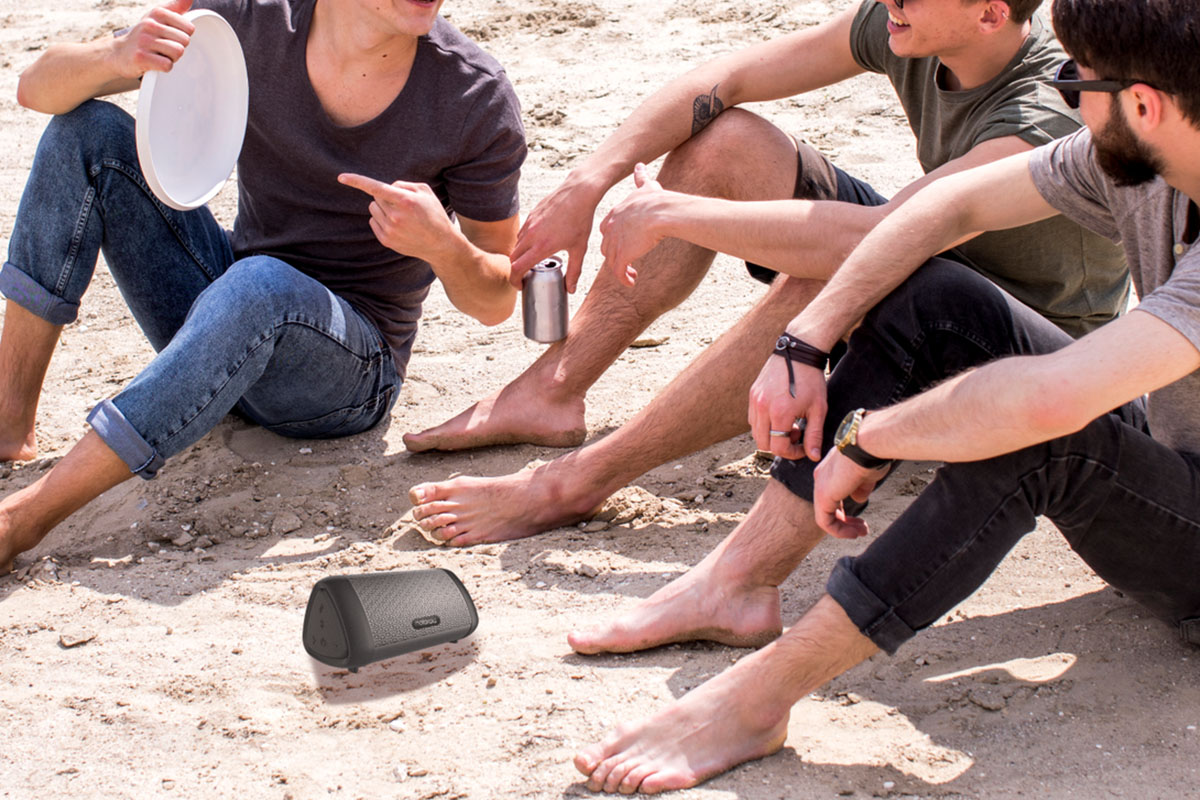
Motorola Sonic Sub 530 Wireless Bluetooth Speaker

Don’t stop the music, wherever you go. This Motorola Sonic Sub 530 Wireless Bluetooth Speaker gives you 9 hours of powerful stereo sound quality thanks to the 5-watts speaker. It answers to voice commands like Siri, Alexa, and Google Assistant, and it can also tag along to your next pool party or beach hang since its IPX5 certified waterproof.

Get the Motorola Sonic Sub 530 Wireless Bluetooth Speaker for $39.86 (reg. $59) with promo code HOLIDAY20.

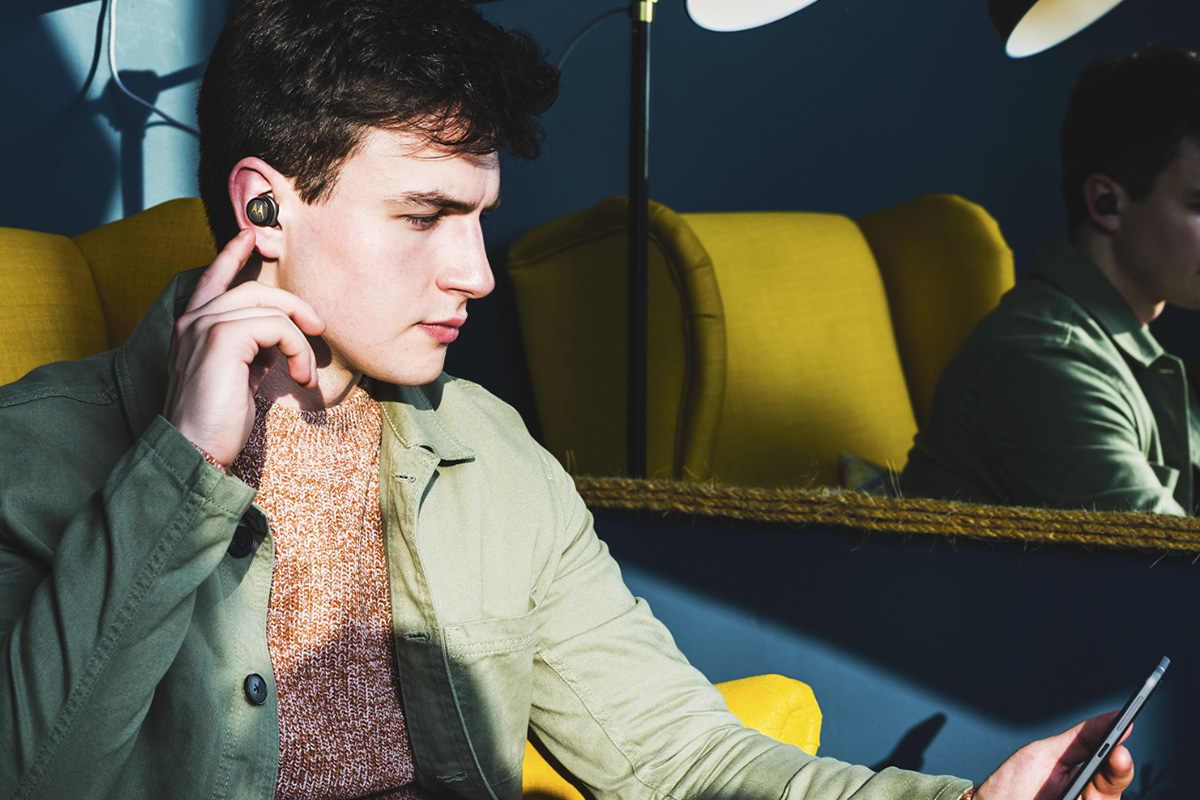
Motorola Tech4 Smart True Wireless Earbuds

Looking for earbuds that do more? These 3-in-1 earbuds let you listen to up to 11 hours of quality audio via sports loop, audio plug-in, or completely wireless. The handy plug-in option means you can have unlimited playtime and you never need to worry about how strenuous your workout is thanks to their water-resistant status. There’s even a feature to help you find them if you misplace them, making these an ideal pick for those that hate searching around for their earbuds.

Get the Motorola Tech4 Smart True Wireless Earbuds for $67.96 (reg. 99) with promo code HOLIDAY20. 

VerveBuds 100 True Wireless Earbuds

Ditch the wires and take your music to go anytime with the VerveBuds 100 True Wireless Earbuds. They deliver 5 hours of playtime and 9 hours with the case, all providing superior sound quality. They offer hands-free calling, an ergonomic design that ensures a comfy fit, IPX5 waterproof status and the ability to use voice command like Alexa, Siri, and Google Assistant when needed, all with an impressive 4.1 out of 5 stars on Amazon.

Get the VerveBuds 100 True Wireless Earbuds for $33.56 (reg. $49) with promo code HOLIDAY20. 

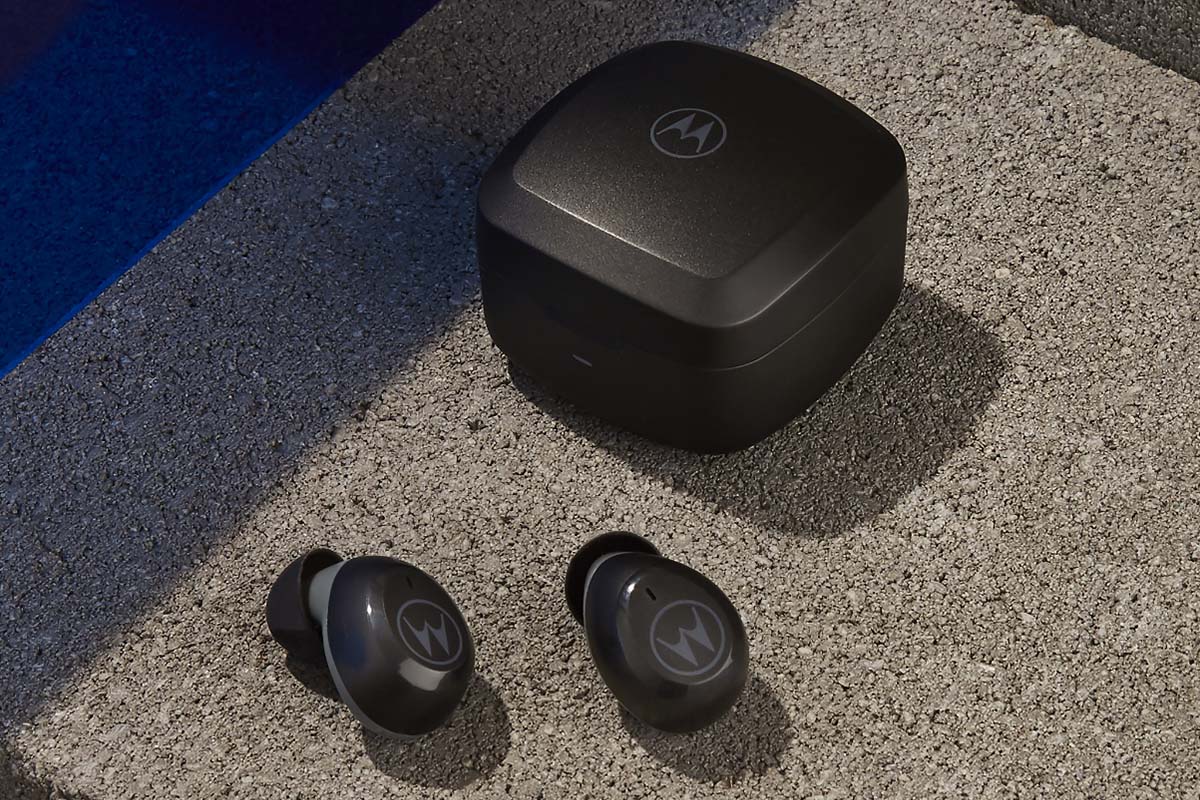
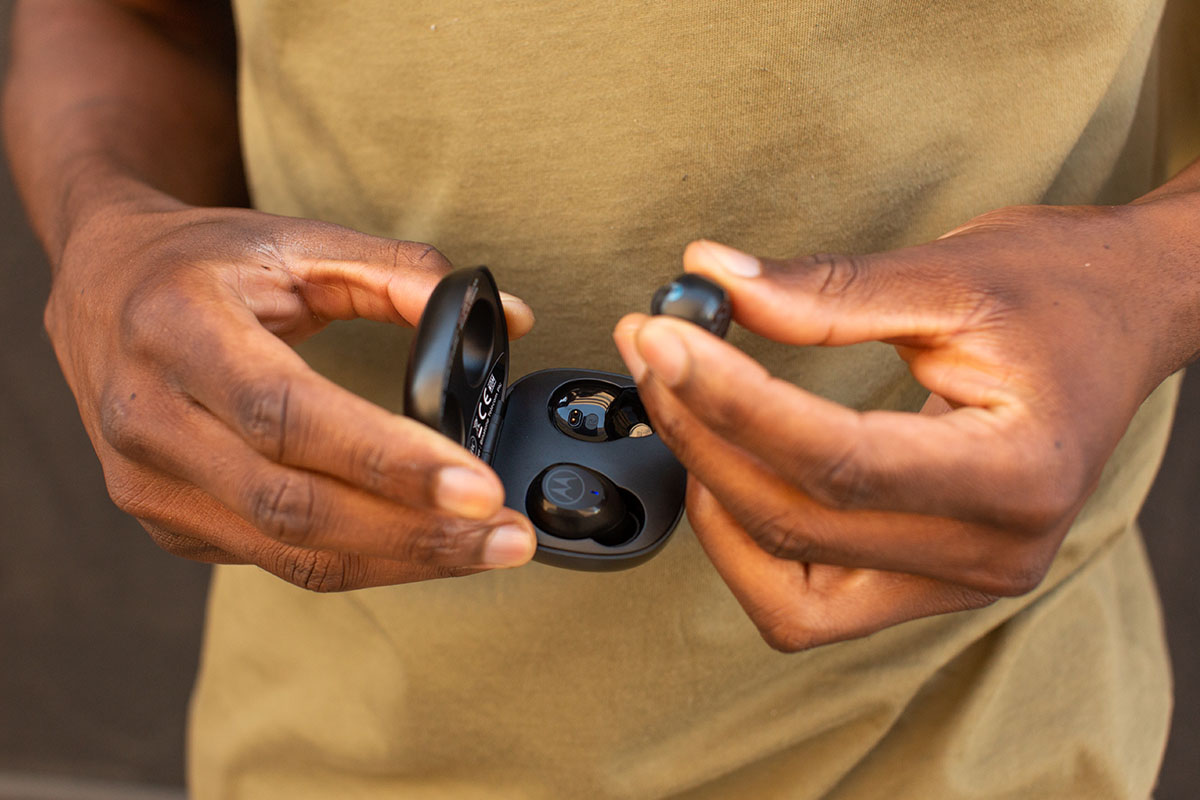
Moto Buds Charge True Wireless In-Ear Headphones

Don’t miss a beat with 10 hours of battery life thanks to The Moto Buds Charge True Wireless In-Ear Headphones. These wireless earbuds provide superior sound quality for music and calls. Charge them on the go using the integrated Mobile-charge cable and then relax with these ergonomic, water and sweat resistant sound solutions. And if you are partial to a specific power option, they also include a USB-C cable and USB-C charging port to suit your needs.

Get the Moto Buds Charge True Wireless In-Ear Headphones for $47.96 (reg. $69) with promo code HOLIDAY20.

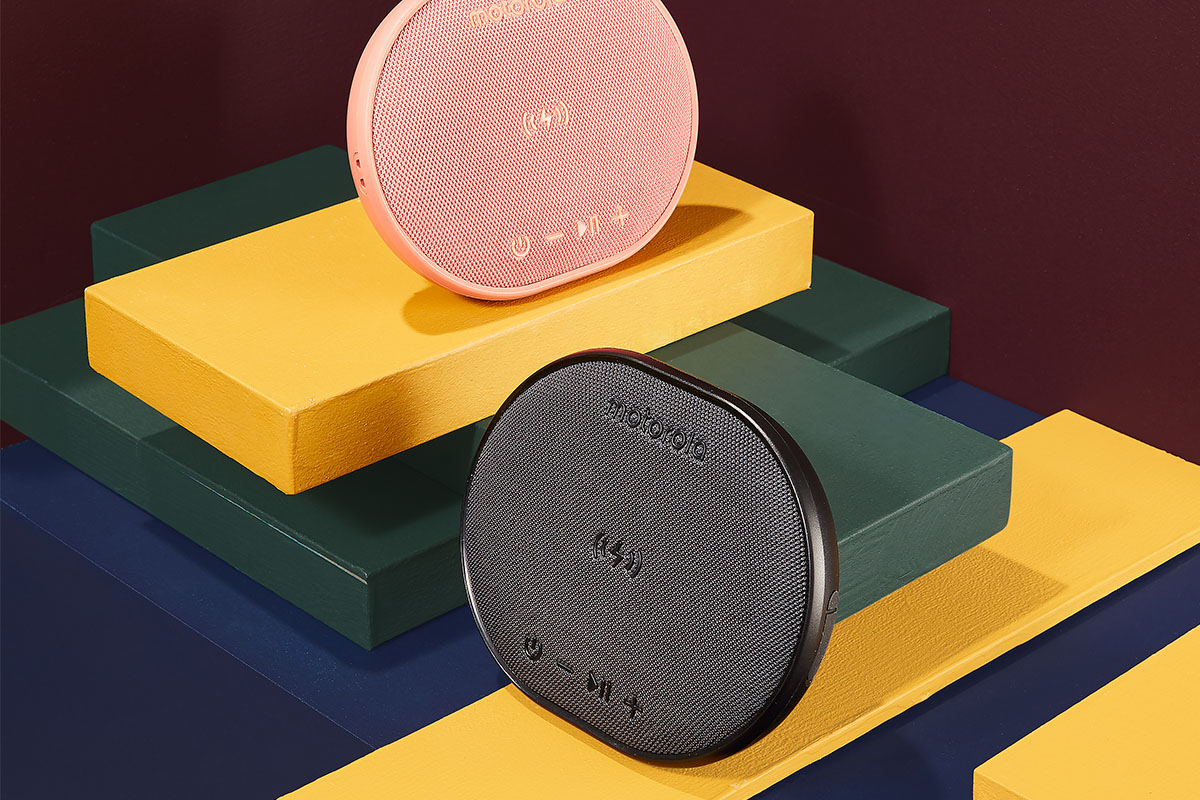
Motorola Sonic Sub 500 Wireless Fast Charging Speaker

If you’re in need of a Bluetooth speaker that does more, the Motorola Sonic Sub 500 Wireless Fast Charging Speaker is up to the task. Equipped with a powerful 5W RMS speaker unit with built-in subwoofer, you’re guaranteed to receive outstanding powerful sound, and the slim size makes it perfect to bring along anywhere. Aside from playing music, you can also take calls and use it to charge up your phone or headphones that to its 10W wireless turbo charging pad.

Get the Motorola Sonic Sub 500 Wireless Fast Charging Speaker for $42.36 (reg. $59) with promo code HOLIDAY20. 

Note: Terms and conditions apply. See the relevant retail sites for more information. For more great deals, go to our partners at TechBargains.com.

Now read:


from ExtremeTechExtremeTech https://ift.tt/2WYgooH

الأربعاء، 30 ديسمبر 2020

NEWS TECHNOLOGIE

Today you can get a compact 13.3-inch Dell laptop with a Core i7 processor, a 4K display and an aluminum chassis all for just $999.99. You can also save $250 on a new iRobot Roomba i6+ robot vacuum that has an automatic dirt disposal base station.

  • Dell XPS 13 7390 Intel Core i7-10510U 13.3-Inch Laptop w/ 16GB DDR4 RAM and 256GB M.2 NVMe SSD for $999.99 from Dell with promo code 50OFF699 (List price $1,549.99)
  • iRobot Roomba i6+ 6550 Robot Vacuum w/ Self Emptying Bin for $549.99 from Amazon (List price $799.99)
  • Oculus Rift S VR Gaming Headset for $299.00 from Amazon (List price $399.00)
  • Sony WH-1000XM4 Wireless Noise Cancelling Headphones w/ Alexa Voice Control for $278.00 from Amazon (List price $349.99)
  • Apple Watch Series 6 40mm GPS Smartwatch for $339.99 from Amazon (List price $399.00)
  • Dell Inspiron 15 5000 AMD Ryzen 5 4500U 15.6-Inch 1080p Laptop w/ 8GB DDR4 RAM and 256GB M.2 NVMe SSD for $499.99 from Dell with promo code EXTRA50 (List price $629.99)
  • Eufy Anker RoboVac 11S Robot Vacuum for $149.99 from Amazon (List price $229.99)

Dell XPS 13 7390 Intel Core i7-10510U 13.3-Inch Laptop w/ 16GB DDR4 RAM and 256GB M.2 NVMe SSD ($999.99)

Dell designed this notebook to be a high-end solution for work and travel. The metal-clad notebook features a fast Intel Core i7-10510U quad-core processor and a 4K display touchscreen. According to Dell, this system also has excellent battery life and can last for up to 19 hours on a single charge. Right now you can one from Dell marked down from $1,549.99 to $999.99 with promo code 50OFF699.

iRobot Roomba i6+ 6550 Robot Vacuum w/ Self Emptying Bin ($549.99)

All robot vacs help save you time by cleaning the floors in your home for you, but the Roomba i6+ takes this a step further by reducing the amount of time you need to spend servicing the robot vacuum itself. Most robot vacuums can only hold a limited amount of dirt before they need to be cleaned out. But the i6+ has a charging station that also will empty the rubbish bin in the vacuum, which ultimately means you have to do this less often. Currently, you can get one from Amazon marked down from $799.99 to just $549.99.

Oculus Rift S VR Gaming Headset ($299.00)

Oculus’s Rift S VR headset was designed from the ground up to provide you with an enjoyable gaming experience. It comes with a pair of wireless touch controllers and has everything you need to run VR games — except a PC that is. You will need a capable computer to get the most out of this hardware with Oculus suggesting an Nvidia GTX 1060 or AMD Radeon RX 480 graphics card or better. Currently you can get one of these HMDs from Amazon marked down from $399.00 to just $299.00.

Sony WH-1000XM4 Wireless Noise Cancelling Headphones w/ Alexa Voice Control ($278.00)

With powerful noise-cancelling technology, these headphones provide a superior music-listening experience by eliminating ambient noise. They can last for up to 30 hours on a single charge, and for a limited time you can get a set of these headphones from Amazon marked down from $349.99 to just $278.00.

Note: Terms and conditions apply. See the relevant retail sites for more information. For more great deals, go to our partners at TechBargains.com.

Now read:


from ExtremeTechExtremeTech https://ift.tt/2WX58c5